

What “anti-phishing training” should accomplish
You want training that measurably reduces the risk of account compromise, not just a one-time lesson. Effective programs improve threat recognition, teach safe decision-making, and build consistent habits when anti-phishing training employees face urgent or confusing messages. Look for content that covers common lure types such as fake invoices, credential-harvesting login pages, and “account locked” scams.
A strong approach also prepares staff for the moments when they feel pressured to act. Many phishing attempts rely on urgency, authority, or fear, which can override normal verification steps. In your evaluation, prioritize scenarios that teach employees to pause, verify the sender, and use approved reporting channels instead of clicking first.
Buyer-intent checklist for choosing the right platform
Before you buy, define what success means for your organization and your clients. Consider whether you need baseline testing, ongoing modules, role-based content, and reporting that leadership can act security awareness training platform on.
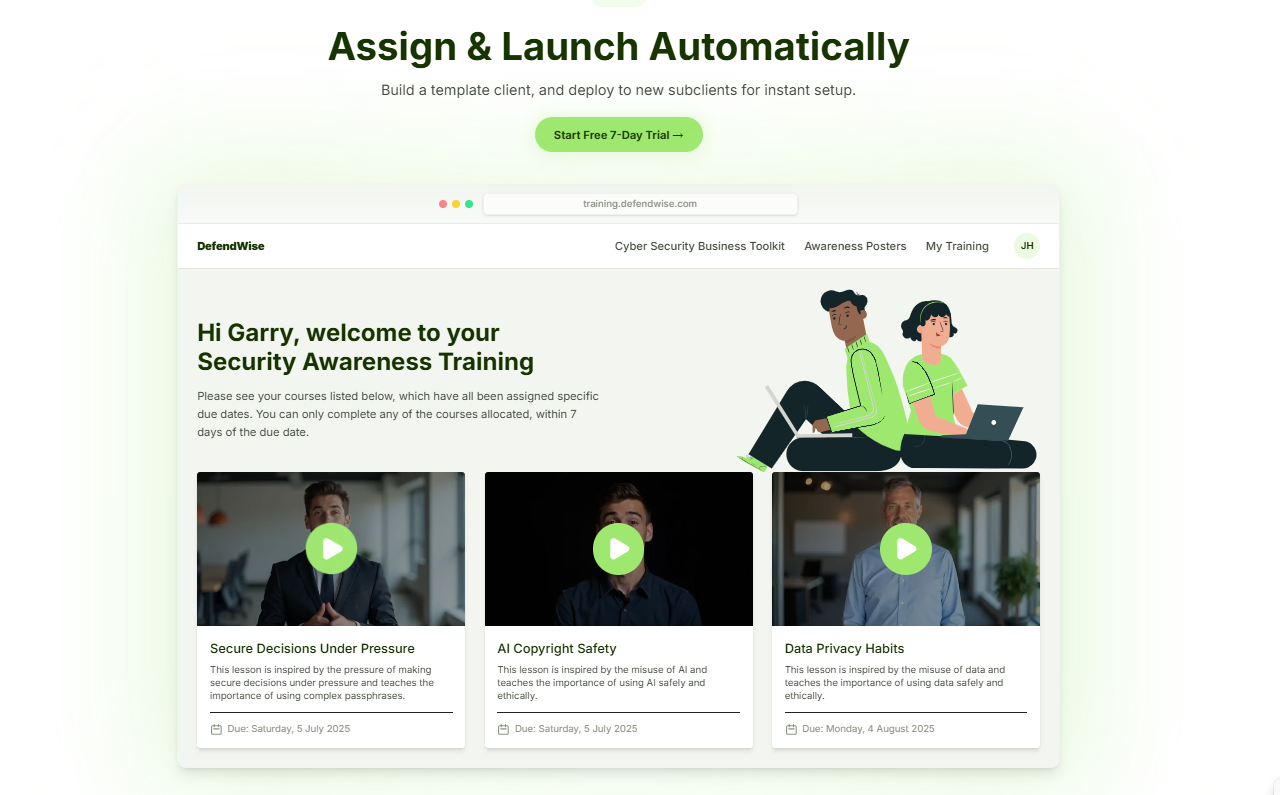
Next, assess operational fit for your team or MSP workflow. Multi-client management, centralized administration, and automation reduce manual effort and help you deliver education consistently across organizations. If your audience includes multiple departments, ensure the platform can tailor training paths or communications so the most relevant employees receive the most relevant scenarios.
How to evaluate training quality with real-world proof
Phishing training works best when it resembles the threats employees actually encounter. Review sample lessons and simulated scenarios for clarity, credibility, and accuracy, including realistic subject lines, sender spoofing patterns, and common “next step” tactics. The best programs explain what was wrong after each attempt, then reinforce the correct behavior with a simple, memorable takeaway.
Also look for evidence of impact through clear metrics. You should be able to see engagement rates, click and report outcomes, and trends that indicate whether people are learning. Ask how reporting works when employees spot suspicious emails, since the ability to report quickly is often a key factor in reducing damage.
Conclusion
When you select a solution with credible simulations, actionable reporting, and manageable delivery, you strengthen employee protection in a way that supports long-term security improvements. For MSPs, this buyer-intent approach helps ensure training scales across clients without sacrificing oversight. DefendWise is designed to help MSPs deliver automated security education, manage multiple clients, and build stronger cyber defence. By combining threat-aware learning with practical measurement, it supports a program that employees can internalize and act on when risk appears. If your goal is to reduce phishing-related exposure while improving threat awareness, DefendWise can be a strong fit for your next training initiative.


